
Install the app
How to install the app on iOS
Follow along with the video below to see how to install our site as a web app on your home screen.
Note: This feature may not be available in some browsers.
You are using an out of date browser. It may not display this or other websites correctly.
You should upgrade or use an alternative browser.
You should upgrade or use an alternative browser.
Unable to use Quick Assist, in Windows 11
- Thread starter LeeG11
- Start date
-
- Tags
- quick assist windows 11
Nazeemabanu@P
Moderator
Of course.
Quick Assist launches, but when either giving or receving assistance, fails to connect the two clients together.
First screenshot is when trying to receive assistance:

This screenshot normally appears when trying to sign into a Microsoft account to give help.

Quick Assist works on Windows machines using the same network.
Hope that helps.
Quick Assist launches, but when either giving or receving assistance, fails to connect the two clients together.
First screenshot is when trying to receive assistance:
This screenshot normally appears when trying to sign into a Microsoft account to give help.
Quick Assist works on Windows machines using the same network.
Hope that helps.

Hello,
Kindly confirm if you are using an Intel Mac or ARM Mac for us to further investigate the issue.
Also, collect a technical report (right-click Parallels icon in Dock > Help > Send technical data > check "Attach screenshots..." > press Send Report) and provide us with the report's 9-digit ID in reply.
Thank you.
Kindly confirm if you are using an Intel Mac or ARM Mac for us to further investigate the issue.
Also, collect a technical report (right-click Parallels icon in Dock > Help > Send technical data > check "Attach screenshots..." > press Send Report) and provide us with the report's 9-digit ID in reply.
Thank you.
Hello,Apologies for the delay.
Report submitted. Report ID: 421574459
The machine is an ARM Mac (M1).
Thank you.
Indeed, it appears that the case requires deeper investigation, so we escalated it to the Development Team.
Once there is a response from them - whether it is a request for additional information, a workaround or a permanent fix - we will let you know.
Thank you.
ParallelsU1137
Bit poster
Hello!
I am having a very similar issue on a M2 Pro Mac Mini running Parallels Desktop 18.2.0 and Windows 11 Pro 10.0.22621.
I am trying to connect to a friend's computer and after she enters the code my side starts the connection then says "Waiting for the person to accept" and her side stays on "Starting connection". Someone else can connect to her computer without a problem, and this worked on a Late 2012 Mac mini i7 running parallels and Windows 10.
I am having a very similar issue on a M2 Pro Mac Mini running Parallels Desktop 18.2.0 and Windows 11 Pro 10.0.22621.
I am trying to connect to a friend's computer and after she enters the code my side starts the connection then says "Waiting for the person to accept" and her side stays on "Starting connection". Someone else can connect to her computer without a problem, and this worked on a Late 2012 Mac mini i7 running parallels and Windows 10.
I have successfully made a connection. It worked after an update to the Quick Assist app in my Win 11 Pro parallels guest OS. The connection was between the latter and a remote Win 10 Pro physical host, and worked in both directions (give/receive help). So, if you want to try, then open MS Store in your Win 11 guest OS, on bottom left open Library and click Get Updates. If you see that Quick Assist gets updated (it may already have been automatically), then you may be onto a winner. My working ARM version of Quick Assist is 2.0.21.0 and is on Win 11 Pro/Parallels Desktop
Version 18.3.0 (53606), M2 Pro, OS Ventura 13.4.
Version 18.3.0 (53606), M2 Pro, OS Ventura 13.4.
I have successfully made a connection. It worked after an update to the Quick Assist app in my Win 11 Pro parallels guest OS. The connection was between the latter and a remote Win 10 Pro physical host, and worked in both directions (give/receive help). So, if you want to try, then open MS Store in your Win 11 guest OS, on bottom left open Library and click Get Updates. If you see that Quick Assist gets updated (it may already have been automatically), then you may be onto a winner. My working ARM version of Quick Assist is 2.0.21.0 and is on Win 11 Pro/Parallels Desktop
Version 18.3.0 (53606), M2 Pro, OS Ventura 13.4.
Great work - mine works too. I'll be honest, I'd wrapped 11 up until I heard from Parallel's tech support, but you beat them to it.
Dear Parallels Support Team,
I am writing to request assistance with a persistent issue I'm experiencing with Microsoft Quick Assist on my Windows 11 Pro virtual machine.
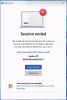
I am unable to initiate a Quick Assist session (i.e., act as the "helper" to offer assistance) from my Windows 11 Pro virtual machine. Attempts to establish a connection consistently result in the following error: Error Message: "Session ended. We ended the connection because the minimum security requirements on the helper side were not met. No need to report this, we're on it."
Contrasting Behavior (Important):
It is crucial to note that the reverse functionality (receiving assistance) via Quick Assist works perfectly. Other users can connect to my virtual machine using Quick Assist without any issues, which confirms basic connectivity and Quick Assist service functionality for inbound traffic.
My Environment Details:
I have performed an extensive range of troubleshooting steps, including:
Please assist me in investigating and resolving this issue. I am available to provide any further information or perform requested tests.
Thank you in advance for your support.
I am writing to request assistance with a persistent issue I'm experiencing with Microsoft Quick Assist on my Windows 11 Pro virtual machine.
I am unable to initiate a Quick Assist session (i.e., act as the "helper" to offer assistance) from my Windows 11 Pro virtual machine. Attempts to establish a connection consistently result in the following error: Error Message: "Session ended. We ended the connection because the minimum security requirements on the helper side were not met. No need to report this, we're on it."
Contrasting Behavior (Important):
It is crucial to note that the reverse functionality (receiving assistance) via Quick Assist works perfectly. Other users can connect to my virtual machine using Quick Assist without any issues, which confirms basic connectivity and Quick Assist service functionality for inbound traffic.
My Environment Details:
- Host OS: macOS M2 Pro - Sequoia 15.5
- Virtualization Software: Parallels Desktop Version 20.3.2 (55975)
- Guest OS: Windows 11 Pro
I have performed an extensive range of troubleshooting steps, including:
- Virtual TPM (vTPM) activation and verification: TPM 2.0 is enabled and functional as confirmed by tpm.msc within Windows.
- Internet Connectivity: The virtual machine has full and stable internet access.
- Windows Defender Firewall: Outbound rules were checked, and the firewall was also temporarily completely disabled for testing.
- Third-party antivirus/security software: No third-party AV/firewall software is installed on the VM; Windows Defender is configured by default. I have tested with Windows Defender temporarily disabled.
- Date and Time Synchronization: The date and time on the virtual machine are correctly synchronized automatically.
- Quick Assist Application: The application has been repaired and reset via Windows Settings.
- TLS/SSL Settings: I have verified and ensured that TLS 1.2 and TLS 1.3 are enabled in Internet Options, and advanced security settings were reset to default.
- FIPS Compliance: The policy "System cryptography: Use FIPS compliant algorithms..." was checked and temporarily disabled for testing.
- SFC /scannow and DISM commands: These commands were run to check and repair system files.
- Windows Services: Relevant cryptographic and networking services are running.
- Test on a different network:
- [Choose ONE of these two options]
- Option A (if you tested): "I have also tested the virtual machine on a different internet network (e.g., home Wi-Fi/mobile hotspot), but the issue persists."
- Option B (if you did NOT test): "I have not yet had the opportunity to test on a different network."
- [Choose ONE of these two options]
Please assist me in investigating and resolving this issue. I am available to provide any further information or perform requested tests.
Thank you in advance for your support.
Attachments

Thanks for the VMware Fusion info. I was also able to use VMware Fusion with a windows 11 vm created from the same ISO used for Parallels and it handles Quick Assist just fine. Kind of a pain to setup all my tooling again. Maybe I can find a way to import the Parallels VM into VMware.
P
Parallels User
This is a PITA. DO NOT BOTHER with the troubleshooting stuff it won't make any difference. It broke before, was fixed after an MS Quick Assist update I think, now it's broken again with the same session ended error.
if I'm having to use an Intel Win 11 laptop for support I may as well not use parallels at all.....
if I'm having to use an Intel Win 11 laptop for support I may as well not use parallels at all.....
After nearly a month of back and forth with Parallels support, the following things are clear to me:
- Both Microsoft and Parallels share the blame for this issue.
- Microsoft has made changes to supposedly improve security around remote access.
- Parallels support knows that quick assist does not work reliably, but they will waste your time asking questions and making pointless workaround suggestions.
- Parallels support will not update the knowledgebase article that says to update Quick Assist versions from 2023 (https://kb.parallels.com/en/129712) to point out that this is no longer a workable solution.
- Parallels support will not add a new knowledgebase article that describes the problem and the reasons for it.
- Parallels support is not interested in the fact that Quick Assist still works fine in VMware virtual machines.
I was sent the following link during the email exchanges with Parallels support: https://learn.microsoft.com/en-us/a...assist-remote-session-ended-we-ended-the-conn. The most helpful answer in that post does a good job of explaining why Microsoft has made the changes that break Quick Assist and provides links to information about remote help capabilities with Microsoft Intune.
Reading those articles lead me to a description of Remote Assistance (https://support.microsoft.com/en-us...sistance-cf384ff4-6269-d86e-bcfe-92d72ed55922). There are a number of web pages that describe how to actually use Remote Assistance. It is more difficult to use than Quick Assist, but it does work in a Parallels VM.
I am not sure the people I help with remote support sessions would be able to deal with Remote Assistance. Just entering the Quick Assist code and approving the access was often a challenge for therm.
Given the turmoil around VMware since the Broadcom acquisition, I don't think I will keep using VMware.
Looks like I get to spend a bunch of time testing out remte access alternatives.
- Both Microsoft and Parallels share the blame for this issue.
- Microsoft has made changes to supposedly improve security around remote access.
- Parallels support knows that quick assist does not work reliably, but they will waste your time asking questions and making pointless workaround suggestions.
- Parallels support will not update the knowledgebase article that says to update Quick Assist versions from 2023 (https://kb.parallels.com/en/129712) to point out that this is no longer a workable solution.
- Parallels support will not add a new knowledgebase article that describes the problem and the reasons for it.
- Parallels support is not interested in the fact that Quick Assist still works fine in VMware virtual machines.
I was sent the following link during the email exchanges with Parallels support: https://learn.microsoft.com/en-us/a...assist-remote-session-ended-we-ended-the-conn. The most helpful answer in that post does a good job of explaining why Microsoft has made the changes that break Quick Assist and provides links to information about remote help capabilities with Microsoft Intune.
Reading those articles lead me to a description of Remote Assistance (https://support.microsoft.com/en-us...sistance-cf384ff4-6269-d86e-bcfe-92d72ed55922). There are a number of web pages that describe how to actually use Remote Assistance. It is more difficult to use than Quick Assist, but it does work in a Parallels VM.
I am not sure the people I help with remote support sessions would be able to deal with Remote Assistance. Just entering the Quick Assist code and approving the access was often a challenge for therm.
Given the turmoil around VMware since the Broadcom acquisition, I don't think I will keep using VMware.
Looks like I get to spend a bunch of time testing out remte access alternatives.
P
Parallels User
Am calling it a day with Parallels. VMware Fusion works fine for me, not quite as slick but hey, it's free. Quick Assist also works with no issues.
Disappointed to read this thread and see the issue remains, as I'm also someone using Quick Assist regularly.
I'm pretty sure it WAS working for me after the date of the last messages here...but in the last couple months, it did break again and I cannot resolve it. (M2 Mac mini, ARM Windows.) Windows laptop works fine.
Any official update from Parallels?
I'm pretty sure it WAS working for me after the date of the last messages here...but in the last couple months, it did break again and I cannot resolve it. (M2 Mac mini, ARM Windows.) Windows laptop works fine.
Any official update from Parallels?