marcosscriven
Junior Member
I've just tried Windows 10 Pro as a guest on a Retina MacBook Pro 15". I chose 'developer' settings, but bumped the video ram up to 1024MB.
Now there's quite a few options that interact regarding display settings:
1) In the OS X host, you can run natively at what it says is 1440x900, but is actually pixel-doubled from 2880x1800, or scaled for a larger 'effective' resolution - that is more real estate, smaller components, at the cost of scaling performance and slightly less smooth.
2) In the Parallels settings you can choose 'Enable Retina'
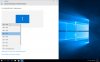
3) On the Windows 10, when you're in 'native' mode on the OS X host, you can see the full 2880x1800 option. Then there's cleartype options, and a slider for scaling.
I usually like to run my MacBook at the maximum scaled size, for an effective 1920x1200 screen (better for development), but running the Windows VM in this is /extremely/ jerky indeed. I've not had such problems with Windows 7.
Now there's quite a few options that interact regarding display settings:
1) In the OS X host, you can run natively at what it says is 1440x900, but is actually pixel-doubled from 2880x1800, or scaled for a larger 'effective' resolution - that is more real estate, smaller components, at the cost of scaling performance and slightly less smooth.
2) In the Parallels settings you can choose 'Enable Retina'
3) On the Windows 10, when you're in 'native' mode on the OS X host, you can see the full 2880x1800 option. Then there's cleartype options, and a slider for scaling.
I usually like to run my MacBook at the maximum scaled size, for an effective 1920x1200 screen (better for development), but running the Windows VM in this is /extremely/ jerky indeed. I've not had such problems with Windows 7.