Network Initialization Failed

StephenB13

Junior Member
Hi everyone.

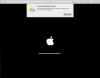
I haven't managed to find any threads with anyone having this same problem. I just downlaoded Parallels Lite to try out running an older version of MacOS to test some things. Whenever I launch a VM I immediately get a message saying: "Network Initialization Failed. Your virtual machine will continue working normally but will have no network connection."

This happens long before the OS loads (or in the case just now after trying again, even before the OS has been installed). I've tried all of the suggested network troubleshooting option but most don't apply (I'm not running windows and the problem seems to be in Parallels not in the OS itself), and none of the others work.

I have selected "shared networking." But I have also noticed that I don't even have the option to choose bridged, and when I look at my network options it doesn't even list any of my network hardware.

I'm at a loss for what to do. I've restarted my Mac, I've uninstalled and reinstalled Parallels. I've installed parallels tools. Again the problem seems to be in parallels itself (or something in my host OS), not in the OS that's being hosted.

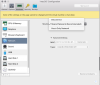
I'v attached a few screenshots of what I'm seeing. Please let me know if you have any questions or need any further information.

I'm running MacOS High Sierra updated to the latest version (though obviously I haven't installed Mojave yet). on my host computer. It's a 2017 5k iMac. 24GB of RAM.

Any suggestions?
 

Attachments

  • Screenshot 2018-10-06 12.05.33.png
    Screenshot 2018-10-06 12.05.33.png
    167.2 KB · Views: 84
  • Screenshot 2018-10-06 12.12.22.png
    Screenshot 2018-10-06 12.12.22.png
    344.6 KB · Views: 78
Hi!!
I have found the solution. I know that if you open parallells in root session it works but I want to open parallells with my user session.

The solution?

sudo -b / Applications / Parallels \ Desktop.app/Contents/MacOS/prl_client_app

Try it and tell me.

Sorry for the previous reply. IT WORKS! (wrong copy/paste)
sudo -b /Applications/Parallels\ Desktop.app/Contents/MacOS/prl_client_app worked for me
Thanks!
 
I ran the command and deleted my VM and created a new one. The VM had network access but my MacBookPro didn't (I couldn't get to any websites or network shares). As soon as I shut down the VM my MacBookPro was back to normal. I tried setting the VM to both shared and bridged network mode and it made no difference.

Uploaded the support logs: 350484011
Hi, the Big Sur is still in beta stage. Some things are constantly changes and issues are appearing and getting fixed.

For your issue please do the next (as a workaround):
execute in Terminal this two commands
prlsrvctl net set Shared --dhcp6-server off
prlsrvctl net set Host-Only --dhcp6-server off

and restart the Parallels Desktop
 
Hi, the Big Sur is still in beta stage. Some things are constantly changes and issues are appearing and getting fixed.

For your issue please do the next (as a workaround):
execute in Terminal this two commands
prlsrvctl net set Shared --dhcp6-server off
prlsrvctl net set Host-Only --dhcp6-server off

and restart the Parallels Desktop
Don't work for me
 
Hello guys,
please try the following workaround:
  1. Shut down the virtual machine and quit Parallels Desktop.
  2. Open Terminal (Applications > Utilities > Terminal), copy and paste the following command and press Enter:
    sudo rm /Library/Preferences/SystemConfiguration/NetworkInterfaces.plist && sudo killall -9 configd
  3. Then prompted, enter your Mac's password and press Enter (Terminal doesn't show the password as you type).
  4. Restart the Mac.
 
Hello guys,
please try the following workaround:
  1. Shut down the virtual machine and quit Parallels Desktop.
  2. Open Terminal (Applications > Utilities > Terminal), copy and paste the following command and press Enter:
    sudo rm /Library/Preferences/SystemConfiguration/NetworkInterfaces.plist && sudo killall -9 configd
  3. Then prompted, enter your Mac's password and press Enter (Terminal doesn't show the password as you type).
  4. Restart the Mac.
Maria, that's the same instruction as you gave in post #57. Doesn't work for me.
 
Hello guys,
please try the following workaround:
  1. Shut down the virtual machine and quit Parallels Desktop.
  2. Open Terminal (Applications > Utilities > Terminal), copy and paste the following command and press Enter:
    sudo rm /Library/Preferences/SystemConfiguration/NetworkInterfaces.plist && sudo killall -9 configd
  3. Then prompted, enter your Mac's password and press Enter (Terminal doesn't show the password as you type).
  4. Restart the Mac.

Like PeterH44, we already tried these instructions and it doesn't work. In the meantime I have updated Big Sur to Beta9 and I'm still experiencing the same network issue
 
I upgraded to BigSur Beta 9 and now this command works for me too!
sudo rm /Library/Preferences/SystemConfiguration/NetworkInterfaces.plist && sudo killall -9 configd

Thank you very much!!!
 
Hi there ☺️
Same problem here... macOS Big Sur Beta 9 & Parallels desktop 16.0.1... everything works fine EXCEPT the network. "Network initialization failed" ...
I have tried EVERYTHING in this thread ...
- Execution as root: I have the network, sure ... but everything else no longer works ... No more display in coherence mode, no more synchronization of files with my mac ...
- "sudo rm /Library/Preferences/SystemConfiguration/NetworkInterfaces.plist && sudo killall -9 configd" has no effect
- Reset network preferences to default in Parallels Desktop has no effect too...

It's a shame, because apart from that it really works perfectly ... It looks like a simple rights issue but how to fix it ... it would be cool to have a solution, even if it's a bit archaic at the moment ^^
 
How i can remove the installation of Windows installed after run with the command sudo -b /Applications/Parallels\ Desktop.app/Contents/MacOS/prl_client_app? I had removed Parallels before than removing Windows
 
The network is down again! It worked for 1-2 days, now it doesn't work again!
Now it doesn't help to use the "sudo rm /Library/Preferences/SystemConfiguration/NetworkInterfaces.plist && sudo killall -9 configd" command!
This is very bossuanto!
 
Back
Top